What Do Shipping Customs Brokers Do in 2026?
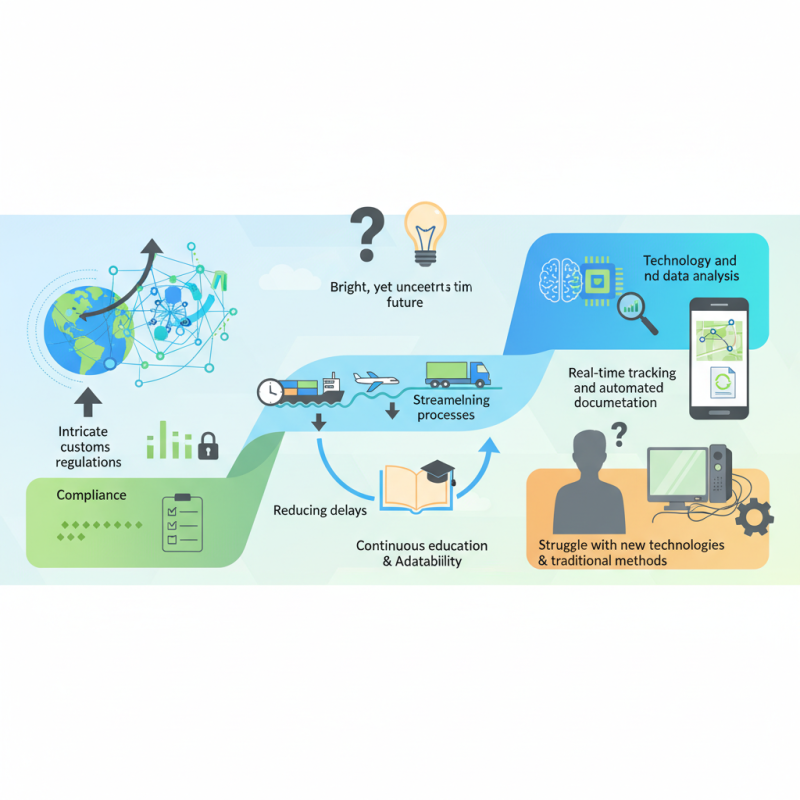
The role of a shipping customs broker is evolving. In 2026, the complexities of international trade demand new skills. These professionals navigate intricate customs regulations and ensure compliance.
Shipping customs brokers now play a crucial role in streamlining processes. They facilitate the movement of goods across borders, reducing delays. Brokers must adapt to technology and data analysis. Real-time tracking and automated documentation are becoming standard.
However, the challenges are significant. Not every broker embraces change easily. Some struggle with new technologies and prefer traditional methods. Reflecting on these shifts is important for growth. The industry will benefit from continuous education and adaptability. The future of shipping customs brokerage is bright, yet uncertain.
The Evolution of Shipping Customs Brokerage by 2026
The landscape of shipping customs brokerage is transforming rapidly as we approach 2026. Advanced technologies, such as artificial intelligence and blockchain, are reshaping operations. Customs brokers now rely on software to streamline paperwork and reduce errors. This digital shift helps brokers handle an influx of shipments more efficiently. Traditional methods are being challenged, but not all brokers adapt well. Some still cling to outdated practices, potentially hindering their growth.
As global trade expands, customs brokers face evolving regulations. Keeping pace with these changes is crucial. Brokers must invest in continuous education to stay relevant. Some may struggle with this, lagging behind their competitors. The demand for clear communication also rises. Clients expect timely updates on their shipments. Failure to meet these expectations may lead to reputational harm.
The future lies in collaboration and transparency. Innovative brokers are forming partnerships with tech companies. They are enhancing service offerings through integrated platforms. But not every broker is on board. Resistance to change can be an obstacle. To thrive in 2026, adaptability and a forward-thinking mindset are essential.
Key Responsibilities of Customs Brokers in 2026
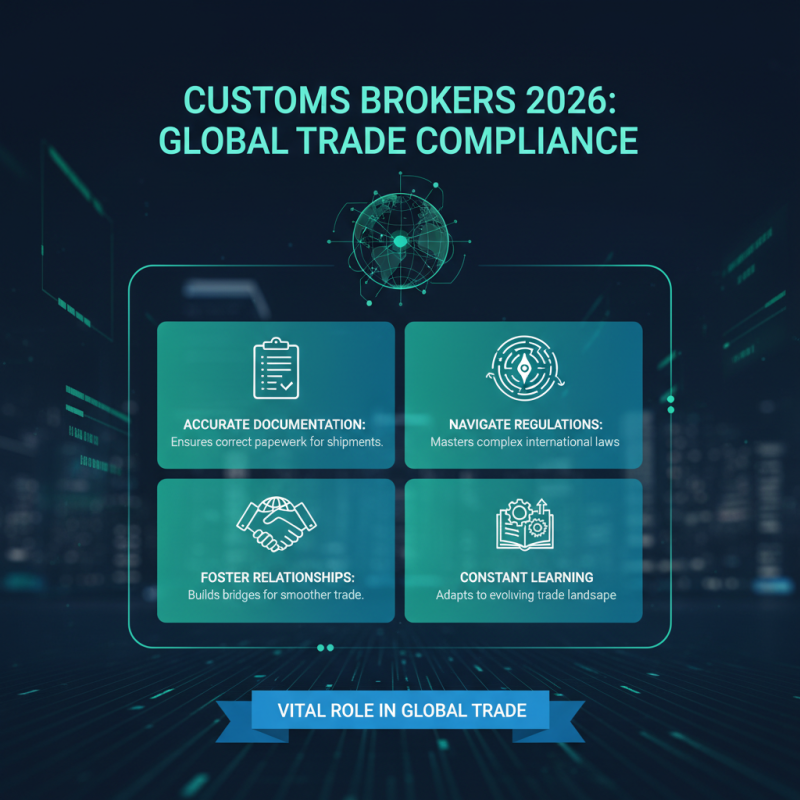
In 2026, customs brokers will play a crucial role in global trade. Their key responsibilities will include navigating complex regulations and ensuring compliance with customs laws. With e-commerce projected to grow by over 20% annually, the demand for efficient customs services will surge. Brokers will need to adapt to emerging technologies and data analytics to streamline processes.
Understanding customs regulations is vital. Brokers must stay updated on changing trade agreements and tariffs. They will also be responsible for preparing and submitting documentation required for import and export shipments. According to a recent industry report, up to 30% of shipments face delays due to paperwork errors. This emphasizes the importance of precision in documentation.
**Tip:** Regular training sessions can help brokers stay informed about the latest customs regulations. Networking with industry professionals can also provide valuable insights.
Another responsibility will be managing supply chain risks. Brokers will need to identify potential disruptions and develop contingency plans. The global nature of trade means they must often work with partners across different regions. Poor communication can lead to inefficiencies. It's essential to establish clear channels and protocols.
**Tip:** Use collaborative tools to enhance communication between teams. This can reduce delays and improve overall efficiency.
What Do Shipping Customs Brokers Do in 2026? - Key Responsibilities of Customs Brokers in 2026
| Responsibility |
Description |
Importance (1-10) |
| Regulatory Compliance |
Ensuring all shipments comply with local and international trade laws and regulations. |
10 |
| Documentation Handling |
Preparing and reviewing all necessary documentation for customs clearance. |
9 |
| Duty Payment |
Calculating and facilitating the payment of duties and taxes on imported goods. |
8 |
| Communication with Authorities |
Liaising with customs and other government agencies on behalf of clients. |
9 |
| Risk Assessment |
Identifying potential risks associated with shipments and advising clients accordingly. |
8 |
| Trade Advisory |
Providing insights on trade agreements and tariffs that may affect shipments. |
7 |
| Technology Integration |
Utilizing technology tools to streamline customs processes and enhance efficiency. |
9 |
Technological Advances Impacting Customs Brokerage Practices
In 2026, shipping customs brokers will rely heavily on technological advancements. Automation will play a vital role in streamlining processes. Artificial intelligence will assist in processing paperwork faster and more accurately. This shift helps reduce human error, yet it also raises concerns about job displacement.
Data analytics will be crucial for predicting trends. Brokers can analyze shipment histories to optimize routes. This capability reinforces efficiency in logistics. However, technology needs constant updates. Brokers must adapt or risk falling behind. It's a complex balance of using tools while retaining a personal touch.
Tips: Stay informed on tech trends. Continuous learning is essential. Also, build a solid network. Relationships still matter in an automated world. Finally, don’t shy away from seeking feedback. Reflecting on experiences helps refine practices.
Regulatory Changes and Their Effects on Shipping Customs Brokers
In 2026, changes in regulations are reshaping the role of shipping customs brokers. These professionals must navigate an increasingly complex landscape. New tariffs and trade agreements alter how products enter a country. Brokers need to stay updated on these regulations. It’s a constant learning process.
Compliance has never been more critical. Brokers face pressure to ensure shipments meet all legal standards. Fines for misclassification or delayed paperwork can be substantial. Many are turning to advanced technology for help. Yet, reliance on software may come with its own risks. Errors in automated systems can lead to costly mistakes.
The relationship between brokers and clients is shifting too. Clients now expect more transparency and education. Brokers must become communicators, explaining changes clearly. It can be challenging. Misunderstanding can lead to unexpected delays and frustrations. This evolving role emphasizes the need for ongoing training and adaptability in an unpredictable environment.
Impact of Regulatory Changes on Shipping Customs Brokers in 2026